When I first found out about Lil Jon’s “Total Meditation” album, I laughed. The Youtube comments were amazing. “He’s gone from crunk to monk” and “sanskreet, skreet, skreet, skreet skreet”. But Lil Jon took this endeavor seriously, hiring the best in the business to help him sculpt a credible meditation practice as a way to help himself work out his recent divorce. Physician, heal thyself.
There are two advantages that famous rappers have over the usual mediation guru. The first is that rap transfers to voice narration like college credits. It’s like their usual gig but slower and they don’t need to rhyme. Proper mic technique isn’t usually covered in spiritual retreats. The second is a dream team of productions who know nuances of a Neumann microphone versus a Shure.
Producer Douglas David has some Grammys under his belt, as well as Aretha Franklin broadcasts. Billboard Magazine lists him as one of the top philanthropists in the world.
The members of the recording engineering team of Wayne Sunderland and Nathan “Slade” Smith have heavy reps in the audio industry. Sunderland is a mastering Engineer at Suture Mastering, and Slade Smith has collaborated with Lil Jon his whole life, being his son. DJ Slade is a sought after DJ in his own right.
The mixes are perfect and his voice has enough cool tricks to keep one engaged. Mixing engineer Trammell Starks has toured with Patti Labelle and Roberta Flack as a keyboardist, produced albums for the London Symphony Orchestra, and composed over 40 songs for the Weather Channel.
Lil Jon brought in a ringer to help him out with the content. Kabir Sehgal is a jazz bassist, former JPMorgan Vice President, published author, navy veteran, composer, and Grammy Award-winning producer.He has produced albums for Deepak Chopra, who is huge in the meditation game. Like appearing on Oprah huge.
While none of the practices break new ground, they are a nice collection of the old tried and true ancient techniques with a modern flavor. Lil Jon and Kabir Sehgal cover everything from anxiety to grieving in bite-sized ten minute chunks. Sure, Lil John gets a little cheesy sometimes with whispered call and response, but his enthusiasm makes up for it.
My favorite session is the breathing one. In the wrong hands, this exercise can be a bit boring, but Lil Jon captures my attention the entire time. I also like the one based on nurturing friendship. We are all guilty of not giving one hundred percent in our relationships sometimes, and Mr. Jon is right to call us out and remind us that a little relationship maintenance can go a long way. I’m hoping my friends notice a difference with my moody ass since I’ve taken to self care. The things I do for those people.
After completing the circuit can I say that Lil Jon meditations are worth the ride? As an experienced meditator, I’d say yes. These are the perfect gateway meditations, especially for people who hate meditation. And if Lil Jon helps just one person on their journey to self actualization, then I must say “OKAAAAAAAYYYYY!”
Facebook Ads, I remember when you used to be cool. For twenty bucks a month, I could reach between 100-700 readers. Utilizing their targeted ads, I reached people whose interests aligned with bothering the ones who couldn’t care less. Not too shabby. But when I tried to boost my latest post “What People in Power could Learn from David Lynch” I ran into trouble. First, Facebook Ads said my ad didn’t have enough funds. (Ok then why do you have the slider go down that far?) Then made me prepay $25 that I haven’t figured out how to get back. They finally ran my ad, but said that I would probably get no views unless I ponied up more cash. How the hell does that work?
Bro! Gimme my $25 back!
Facebook Ads and I had a good run. I’m not going to pretend that my voice needs to be heard or that I’m ever in step with the gestalt. But there were a couple hundred here and there who indeed wanted to know the nuances of the drummers of the Ramones or what hits international songwriting duo Chin and Chapman wrote besides “Ballroom Blitz.”
But what if there is someone out there with something important to say with the same cash flow problem as I have? Revolutions happen when the right words reach the right ears. Brian Eno famously said that the Velvet Underground only sold 30,000 copies, but every one of the 30,000 listeners started a band.
One would think that Meta, a company built on the shoulders of artists, would gatekeep art. It’s not like Meta needs to rent more trucks to send my blog posts down the internet wormholes. I’d like to say that the money goes towards paying for more security readers but if they aren’t using AI bots yet, they will be soon. It reeks of a cash grab. Let’s force Susie’s Seashells and Bob’s Bakery to shell out more dough. And if they are an artist who isn’t bringing in positive cashflow? Fuck ‘em.
Looks like the only blogger that will be left is Richie Rich, Can’t wait to read “Twenty Ways to Dispense with the Help if They Forget to Polish the Silver.”
There is nothing like a case of the Sunday scaries as you lie in bed, wondering what hell your personal King Joffrey has planned for you today, as the time on the alarm clock races. A toxic work environment can be to blame for IBS, back pain, alcoholism, depression, anxiety, and other conditions as yet to be discovered.
The problem is that while people might not respect their bosses, they will always respect fear. It’s easy to take the low road and be a bully. Bullies get lunch money with the threat of a knuckle sandwich, and it’s quite effective. However there is a better way.
Anytime the words “Directed by David Lynch” pop up on the silver screen, one thing for is sure: things are about to get really weird in the best possible way. From the Elephant Man, to Twin Peaks, to Moholland Drive, David Lynch has filmed some of the quirkiest moments in cinema.
The following is an excerpt from the Masterclass series, where the who’s-who of various domains, like author Malcolm Gladwell or drag queen Rupaul, wax ecstatic on the craft of their various domains. Here he breaks down how he likes to run his movie sets and the environment he attempts to create. This should be required reading in all employee break rooms, next to the posters explaining the labor laws.
“I feel that a set should be like a happy family, Almost like Thanksgiving everyday, happily going down the road together, getting along and congratulating people all the time for their good work and getting a really great feeling, a safe feeling, too, for the actors, so they can let go and go into a new character with as little fear as possible and really get in there deep.
People who run a set on fear or a business on fear I say are really stupid. If you run a business on fear, you’re going to stress the people, you’re going to cause all sorts of conflicts and jealousies and back stabbing to get ahead in the business. When the father or mother comes home from work, they are going to be coming home tired and stressed and little kids can feel this and there can be arguments in the home based on this stress.
And anxieties and tension and the little kids are wondering what is this kind of world and when you have a fear based thing people don’t want to go the extra mile, if necessary, to help the company. They want to say, “fuck you, man”. They are not happy campers and it doesn’t serve the work. Ideas don’t flow, creativity doesn’t flow. Negativity cramps that tube from which these ideas flow. It squeezes it down and you’re not happy to help the company. A hatred grows for the company and that is really bad. It doesn’t serve anybody and is no good at all.
So the happier the company, the more creative it’s going to be,and the more people will happily want to help if it’s necessary one day to stay late. Are you kidding? They won’t have a problem at all. The next day you have special lunches for them. And you know, it’s beautiful. We are all together on this planet trying live a good life why would you torture people? It’s crazy. We are in this thing together. We got to start enjoying this trip.”
-David Lynch, 2019
David Lynch worked hard on himself so he wouldn’t not to come off as an authoritarian prick. He really cared about everyone who came on his set. He ever took up acting just to build empathy towards his actors, and gave them all cute pet names like Tidbit or Solid Gold. The following video is an account from the actresses that Lynch worked with, that makes him out to be the Anti-Weinstein. Not a bad look, I say.
So much great art has come from toxic environments. Anyone who has watched the Kids in the Hall Documentary or has listened to the Buddy Rich Tapes knows that even the most fun projects on paper can become absolute torture with the wrong vibe. But David Lynch proved that even Avant Garde art can be fun to make, if you bring a positive attitude, at least try to be empathic, and truly care about other people.
The AI revolution has been a catalyst of change for many domains, but its effect on the literary world has been the biggest innovation since the printing press. In fact, the only way you know AI didn’t write this piece is because of the number of grammatical errors.
The following is a biopsy of editorial opinions on AI literary submissions, taken from a smattering of respected literary journals, both famous and underground.
Spectrum Magazine has been around since the 1950’s, as part of California’s College of Creative studies, and has published hundreds if not thousands of short stories. Here is their smarmy response.
“Spectrum celebrates originality and at this time does not accept submissions generated by AI.”
Most literary magazines I’ve researched echoes Spectrum Magazine’s statement, with AI being as popular as a lightbulb salesman at an Amish wedding. But most of them aren’t as nice about it. For example, Flash Fiction Magazine’s response to AI is terse, yet effective, as to be expected by a magazine boasting stories under a thousand words.
“We do not accept stories written by AI tools such as Chat GPT. If you submit such stories, we may ban you from submitting to our magazine.”
Small Wonders Magazine, on the other hand, leaves no questions about their feelings on AI unanswered. Their signature is a Hancockian fuck you to the machine.
“When we started the magazine, the two of us talked through what we wanted the magazine to be. We wanted to give authors and poets a chance to say what was on their hearts to an interested audience. We wanted to support those authors and poets to the best of our ability. We wanted to bring pieces to you, the readers, that would surprise and delight you, and ideally make you feel.
AI-written text betrays all three. AI doesn’t write; it picks statistically-likely words with a bit of randomness thrown in to spice things up. Anything it has to “say” is an amalgam of what other people have already said, filtered and smoothed into content slurry. We have limited space in the magazine, which means that any spot we give to AI-written text displaces a human author or poet. Finally, AI-written text has little in the way of new ideas or striking images. Any surprises it brings is due to it juxtaposing ideas that don’t work together or regurgitating previously-written metaphors, and AI companies are working to sand off even those flashes of serendipity.
When new technology appears, it’s worth asking what your end goals are before adopting it. From our standpoint, AI-generated text is anathema to what we want Small Wonders to be.”
Fabulist Magazine will not only ban you, they will also pull your stories retroactively if you are caught cohorting with robots. They also breakdown what actually constitutes AI Usage in the post digital era. If you don’t know, now you do.
“We affirm to our readers and contributors that The Fabulist Magazine is, first and foremost, a venue for connections and encounters with unadulterated human creative works.
• Unless otherwise specified in any given call for submissions, The Fabulist is not open to works that include AI processes of any sort, including the generation of prompts, titles, names, outlines, dialogue, plot elements, descriptive passages, etc.
• We have updated our contractual and submissions materials to reflect this prohibition as clearly as possible.
• This policy is retroactive; we will remove from our archives any works found to have included undisclosed AI adulteration, though, lacking a formal policy prior to this date, we welcome the opportunity to work with previous contributors to update such works or look at new submissions.
• Moving forward, willful violators of this policy will be permanently banned from our pages.
• No, running a spellchecker or grammar tool on your finished text is not AI.”
Metastellar has a don’t ask, don’t tell policy. I laughed at the bit about the mushrooms.
“You don’t have to tell us how you wrote it. And unless we then submit it to a competition that includes AI restrictions in its guidelines, we won’t ask.
However, writers can feel free to add text to their bios saying that, for instance, their stories are completely written by a human, or written with AI help, or dictated to them by talking mushrooms. We won’t judge.”
These poor bastards at Clarkworld, a fledgling Sci fi and Fantasy Magazine, needed to temporarily shut down their submissions portal after being inundated with AI stories. As if the slush pile wasn’t deep enough with human authors.
“We will not consider any submissions written, developed, or assisted by these tools. Attempting to submit these works may result in being banned from submitting works in the future.”
Here is an Ai magazine curated by humans. While I’m usually a fan of contrarians, and enjoy being as difficult as the next prick, It’s hard to say if Curated Ai are embracing a new technology or kissing up to their new overlords.
”We want to read what you have built writes. You can submit your machine-generated short stories, poems, and other works of textual art to submissions@curatedai.com. Please include your name (or nom de machine) and a brief description of what you did to generate the submitted words.”
Here is another pro AI magazine. This one is supported by Harvard, so it must be a great idea.
“AI Mag is a fully AI-generated literary magazine that seeks to challenge the Harvard community’s – and the world’s – conception of what constitutes art and art-making. Through developing a web interface and fine-tuning large generative machine learning models, we enable students across campus to create works of literature and art using AI. This project explores questions about the nature of art, artist, and meaning: Is AI art real art? Who is the creator of AI art? Are intention and effort crucial to the value of art? Beyond examining the human + AI creative process, AI Mag itself explores the interplay between the traditional, elite practices of old-school literary magazines and the open-source, accessible perspectives the AI art community.”
In conclusion, let’s all try to have fun before we’re stuck mining titanium on Mars for our android overseers. Maybe they will let us keep our phones.
In order to win “most unusual collection” at the annual elementary school intergrade show-and-tell, little Stevie Levandoski collected toothpaste caps for a year, without first checking to see if there indeed was a most unusual collection category. It was not his most wasted year.
The Oddville Press published “Chatter Box” in their Fall 2020 issue, The Antihumanist released “Period” in their 3rd edition and The Writing Disorder published “The Adverb Factory” in their summer 2022 edition.
Steve plays drums in Recording Club. He’s also the Steven in his musical solo project Steven Stereo.
He lives in Philly with his wife Lisa and pug Phil Collins.
Contact
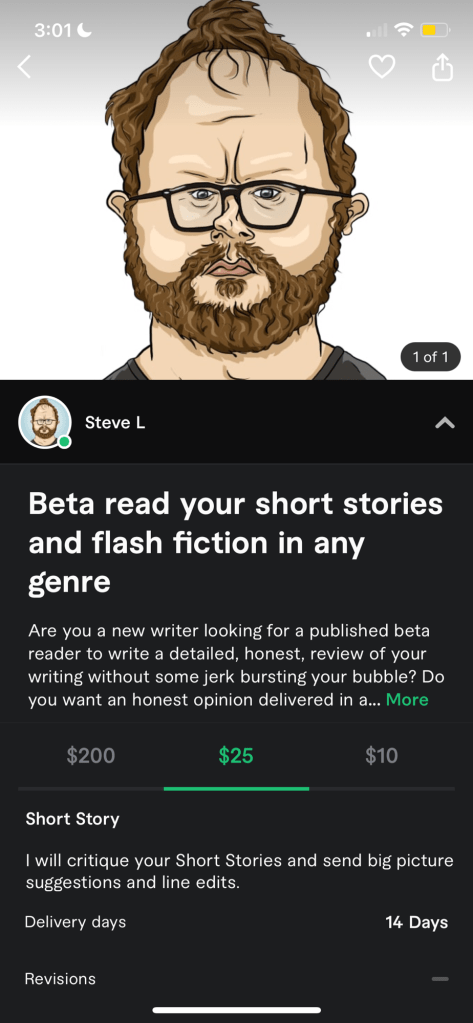
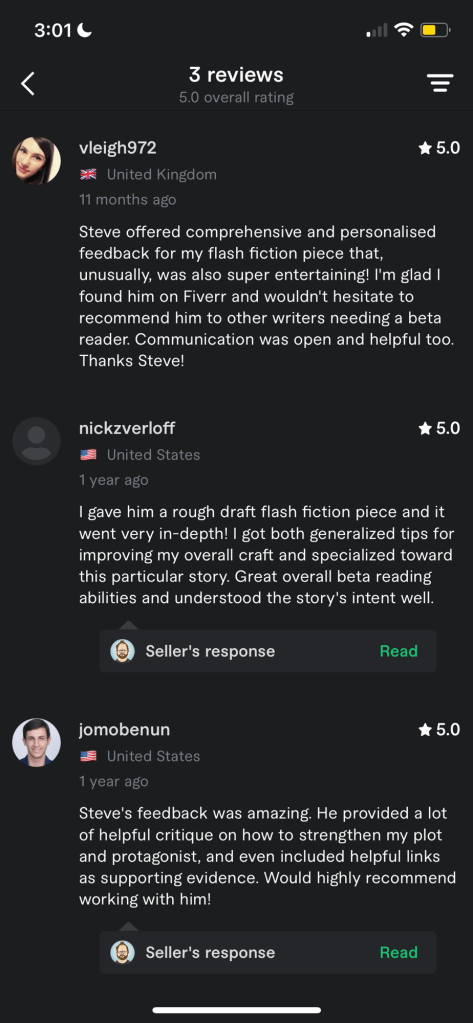
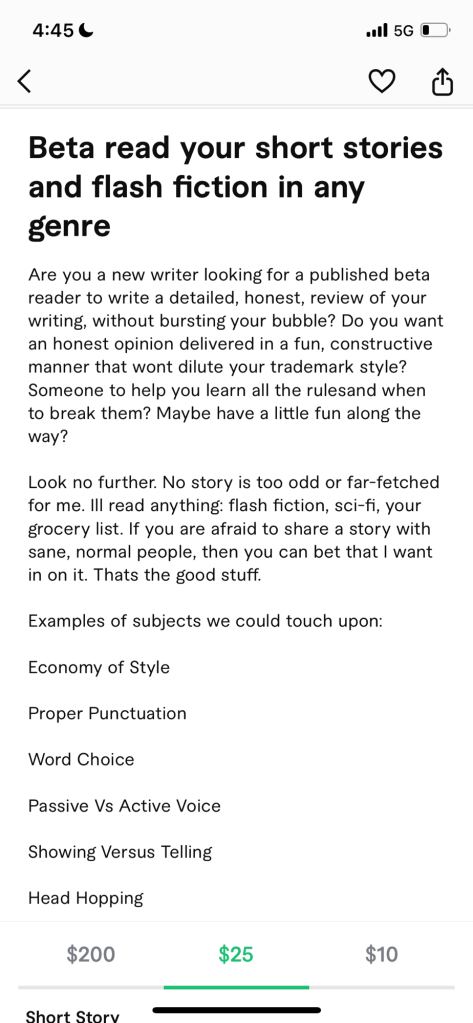
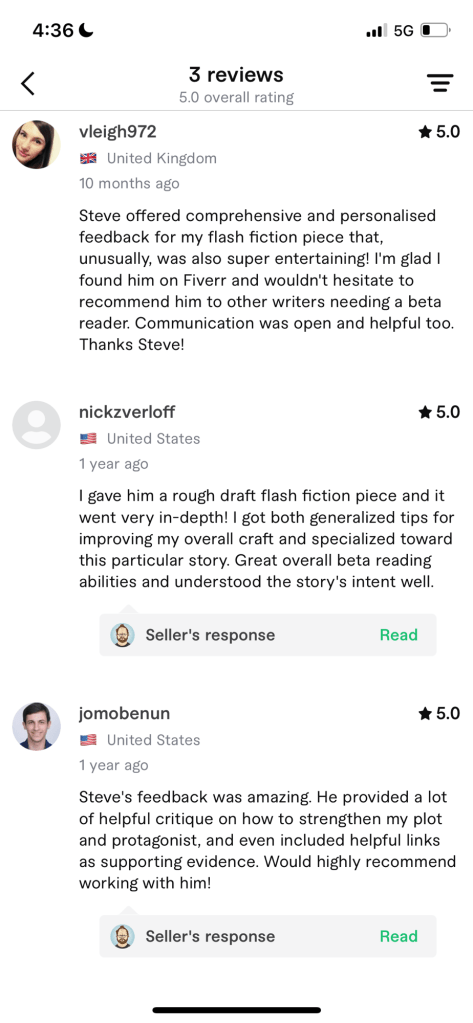
Do you want someone to Beta Read your writing? Look no further. Check out his Fivver.
I’m honored to be included in the latest issue of “The Pink Hydra” from South Africa. My story is about the radium girls from New Jersey in the 1920’s.






 Next In Line Magazine